Friday, March 9, 2012

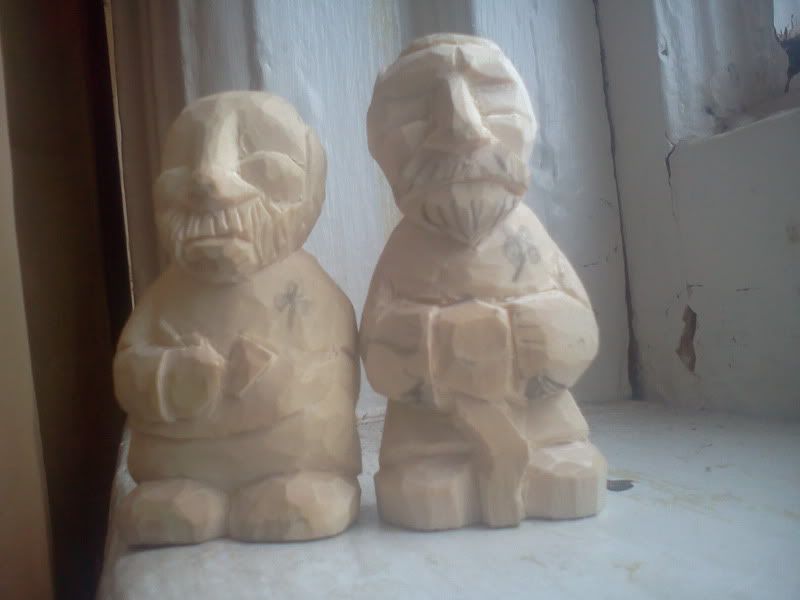
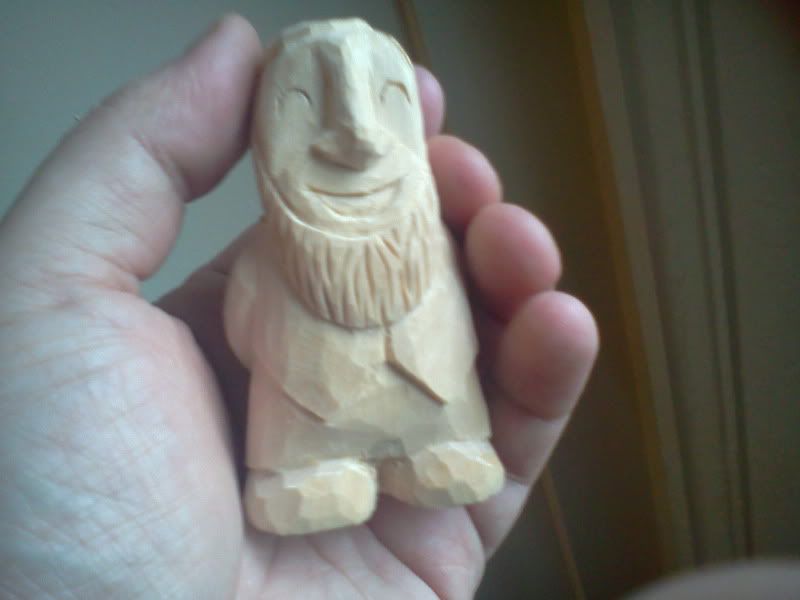
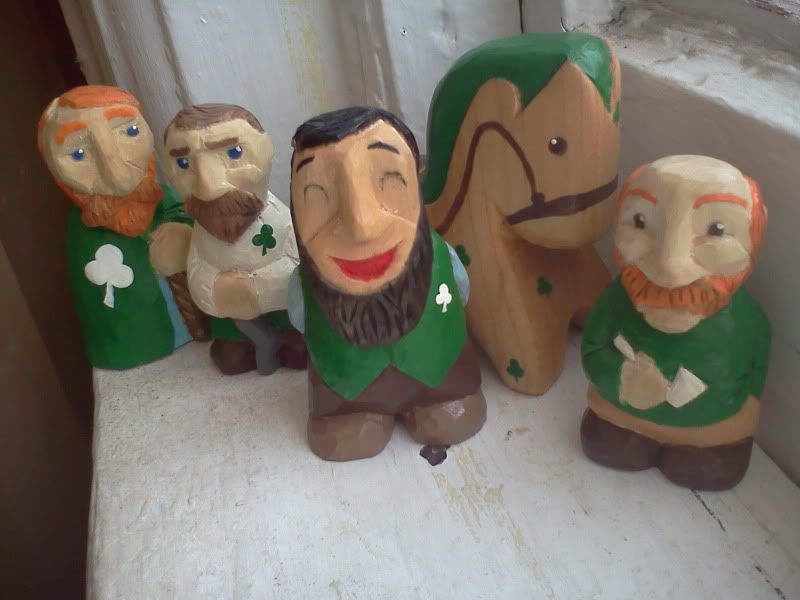
March means Saint Patrick's Day whittlins!

I've been whittlin' up some decorations and door prizes for this year's Saint Patrick's Day celebration.
While many Americans treat March 17th as "Irish-American Mardi Gras," with green plastic beads, dyed green beer, and giant foam shamrocks, my family has always looked at it as "Irish-American Thanksgiving." In addition to great food, drinks, and music, we hold a trivia contest with prizes for our guests.
So far I've made a horse, some fridge magnets, and a handful of leprechauns. Prizes for the kids and grown-up kids alike!

Monday, January 16, 2012

My real Swedish Dala Horses

When I was a little guy, back in the early 1980's, my great aunt Virginia went on a trip to Sweden. On her return, she brought me these two genuine Dalahasts. I remember she gave me a story book too, about a little boy who's toy Dala horse came to life and led him on adventures.
These horses are suprisingly rough. Made for the tourist trade, they look to be rough sawn and quickly carved. The heavy base coat of paint looks dipped, while the saddle, tack, and harness are nicely painted in the two-colors fan brush style.
A sticker on the belly of the red horse reads: "Akta Dalahemslojd Tillv. G.A. Olsson Nunsa, Mora, Sweden"

Sunday, January 15, 2012

Blogger she-nanna-gins

For whatever reason, Blogger is not letting me respond to reader comments. So, thanks for reading, thanks for the kind words, and to Brad: the horses I carve are made from basswood, and sometimes butternut. Both are great woods for carving. They are relatively soft woods (though still hardwoods,) with straight, dense, grain. It's almost as easy to cut across the grain as it to cut with it. Hopefully Blogger will fix these issues with the comments.

Friday, January 13, 2012

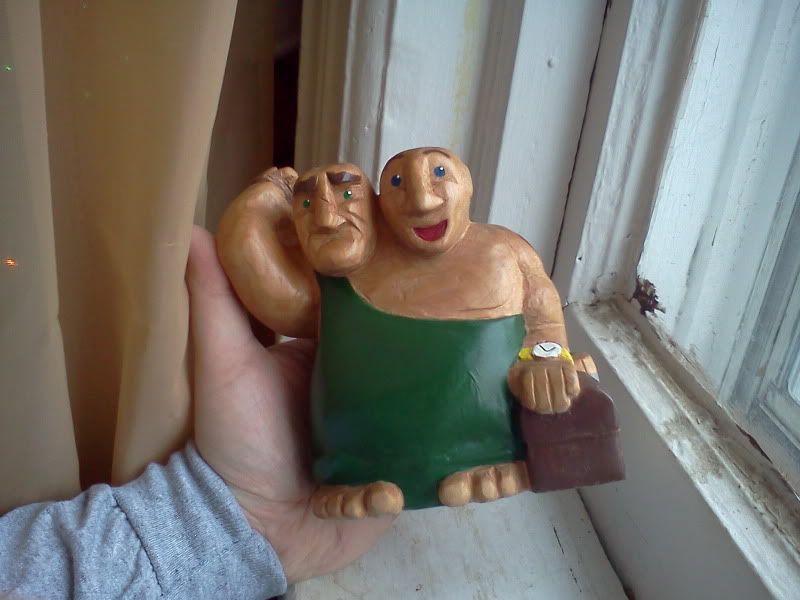
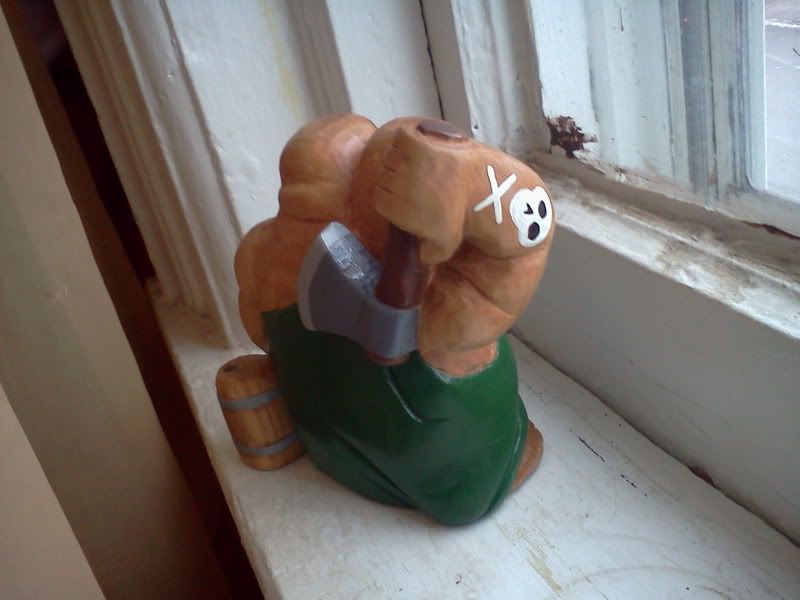
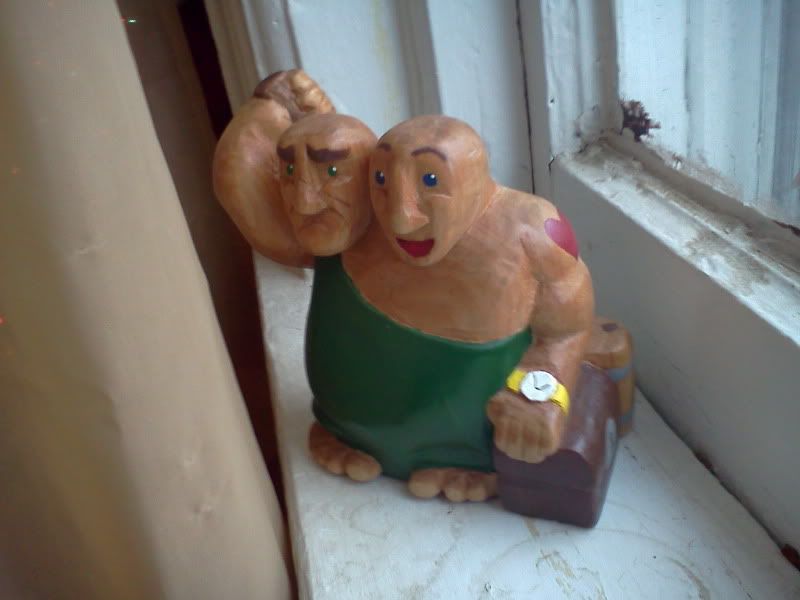
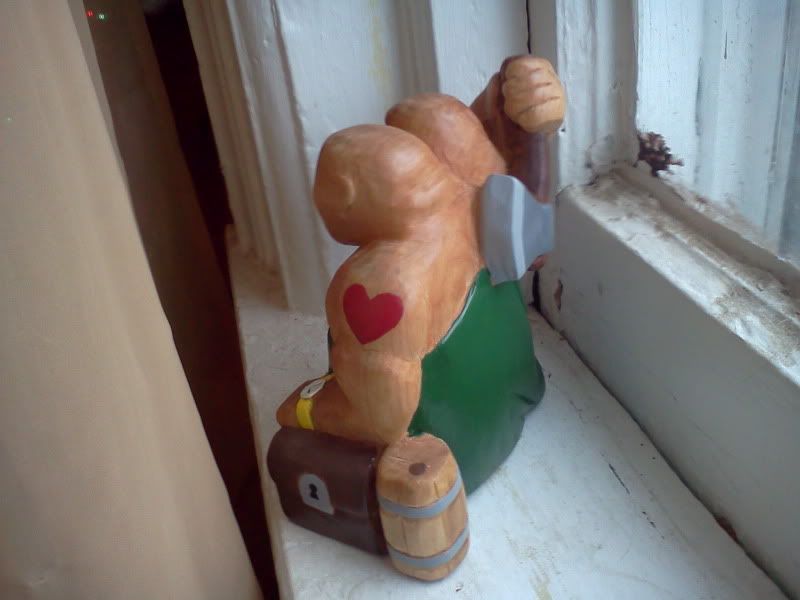
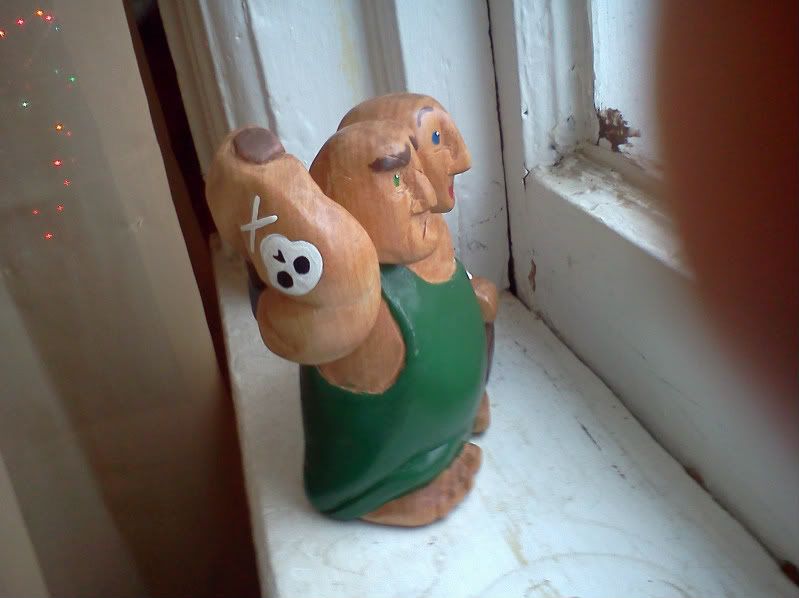
An Ettin for Ezra


Ettins are two-headed giants from fantasy fiction, most famously from CS Lewis' Narnia stories, and the Dungeons & Dragons roleplaying game.

I carved this ettin for Ezra, my friend's three-year-old son. Details on this monster include tattoos, scars, treasure, and a yellow wristwatch. Ezra now has a whole army of whittlied soldiers and wizards. The "bad guys" include a dark wizard, a dragon, and now this ettin.

As always, I used non-toxic materials such as salad bowl finish, acrylic paints, and shellac.

Sunday, December 18, 2011

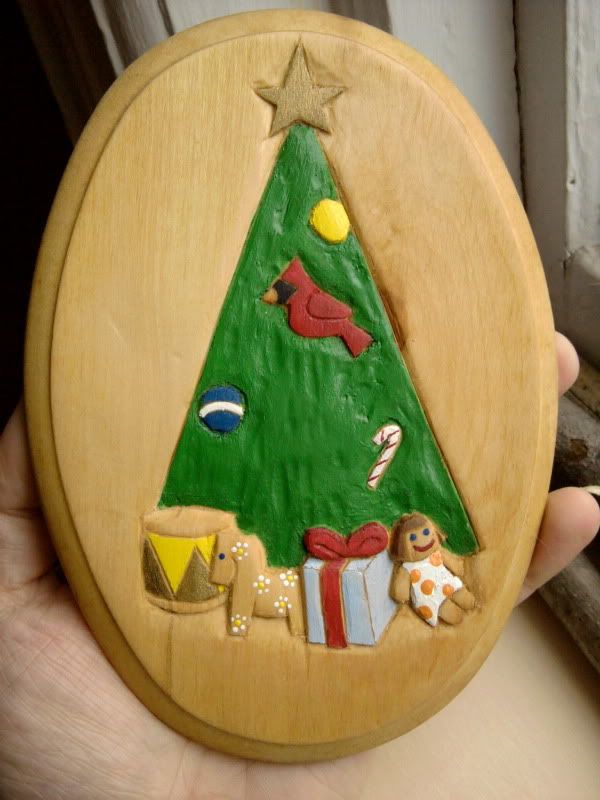
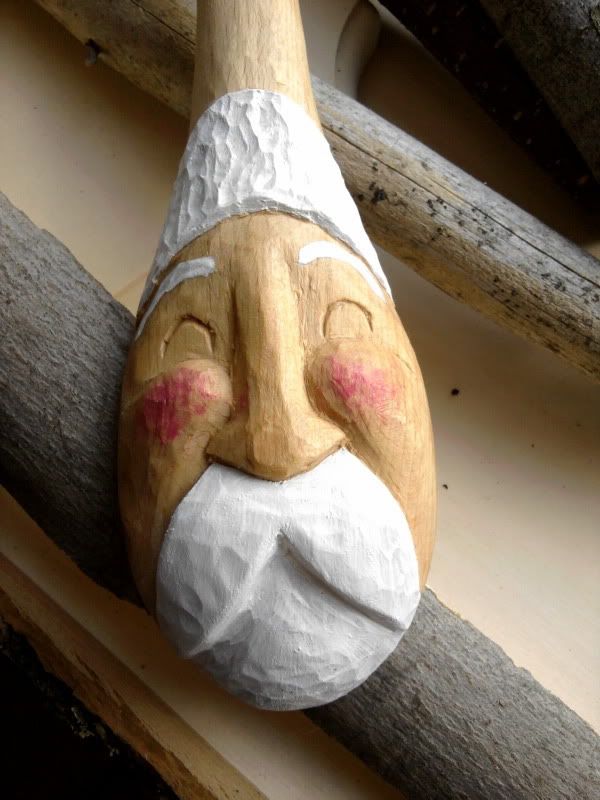
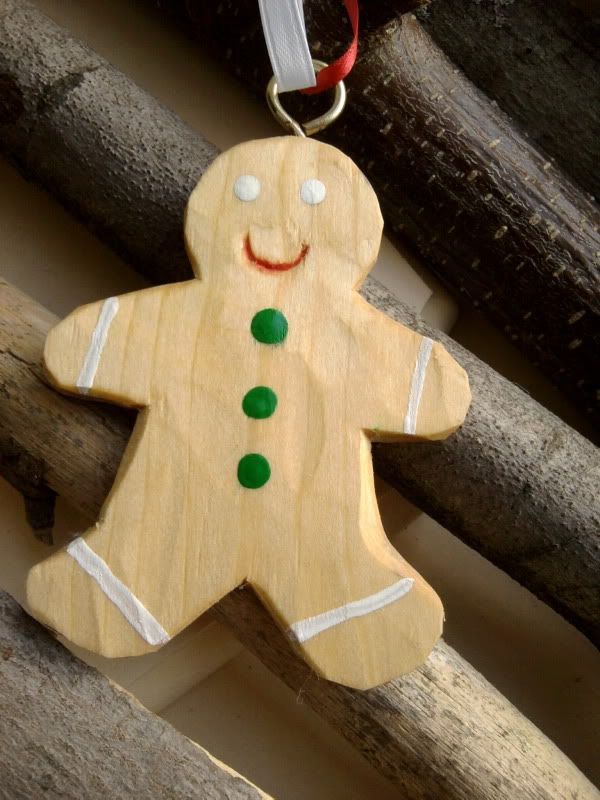
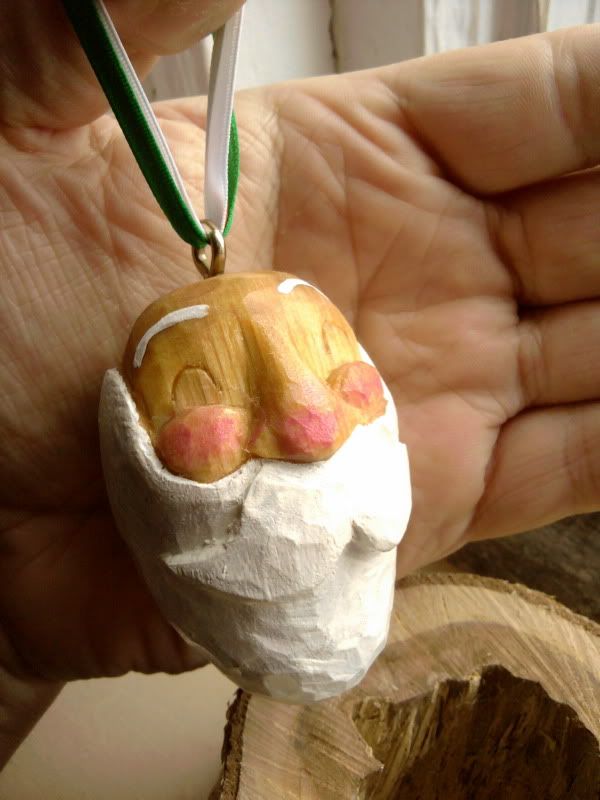
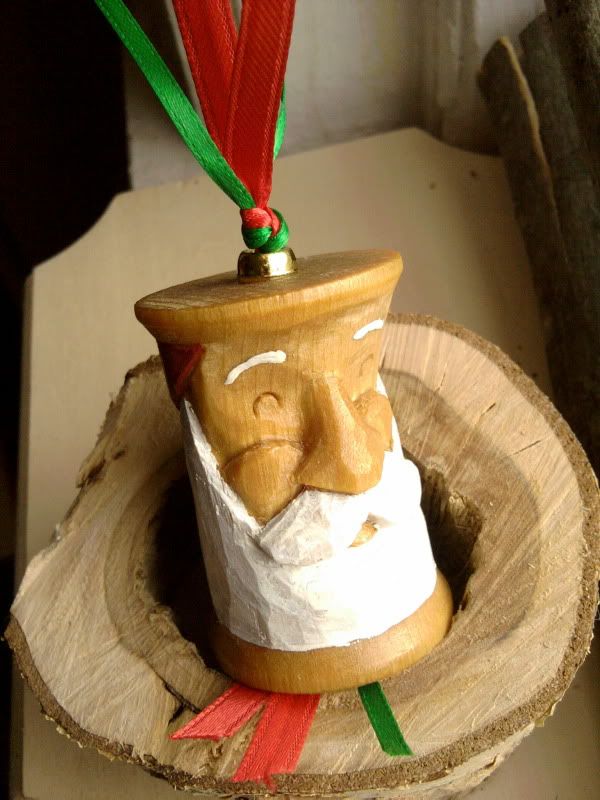
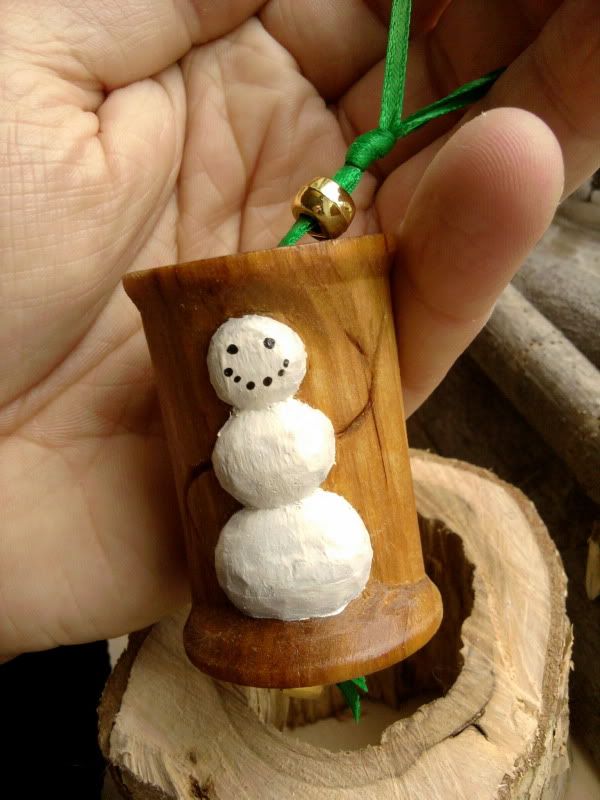
Christmas Carvings Roundup


Let's take a look at this year's hand carved ornaments. Some of these sold, some are still up for sale on my etsy shop, some are for gifts, and some are even for my own Christmas tree!


It's been a fun season for whittlin'. Upcoming projects include birthday presents for a couple of little guys about to see their 2nd and 3rd birthdays, so stay tuned!


Friday, December 16, 2011

Wizards and Warriors: Adventurers in Wood


Inspired by the Lewis Chessmen, these toy wizards and knights are lots of fun to carve. They stand best when given a generally conical shape, and I try to keep everything smooth and blunt in order to protect them from rough hands. Kids like to throw these little guys, and they've proved to be tough and resilient.


I've been thinking of going a little more adult with these figures. A little red on a sword blade, maybe some battle scars to show age and grit.

Carving the Toy Horse's Mane


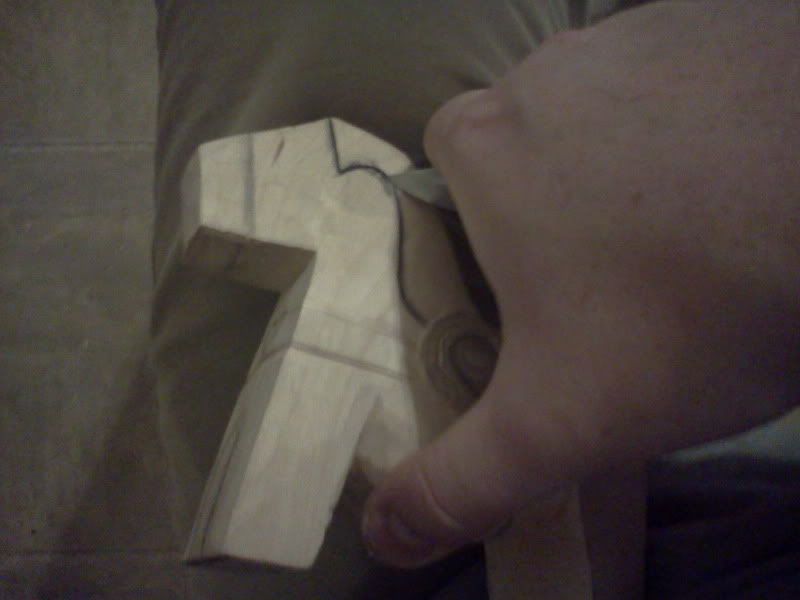
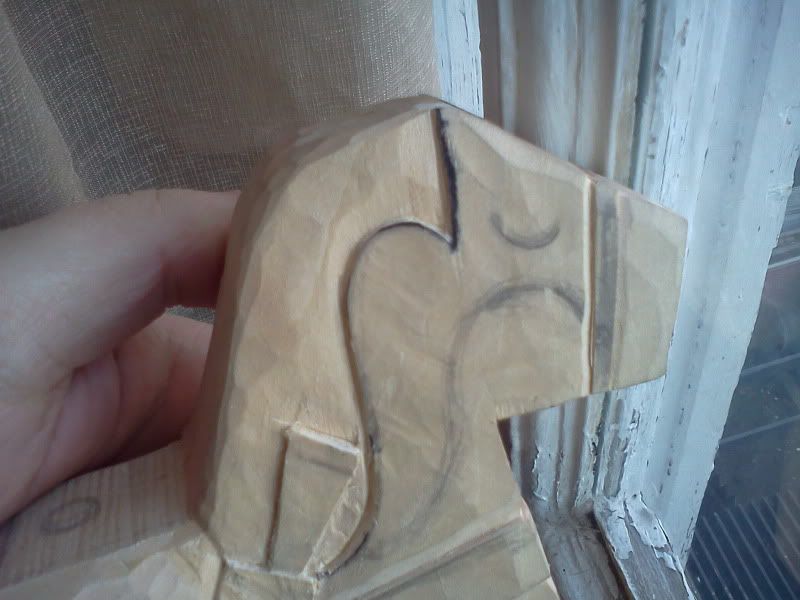
By reader request, here's a look at how I carve the mane for my toy horses. I start by outlining the border with a pencil, then go over it with a black Sharpie marker.

Next, I make a stop cut all along the border. In doing this I use only the tip and lead portion of the blade. On pocket knives this is mostly a natural grip, on larger fixed blade knives such as the Mora, this requires a higher grip that pinches the flat of the blade.
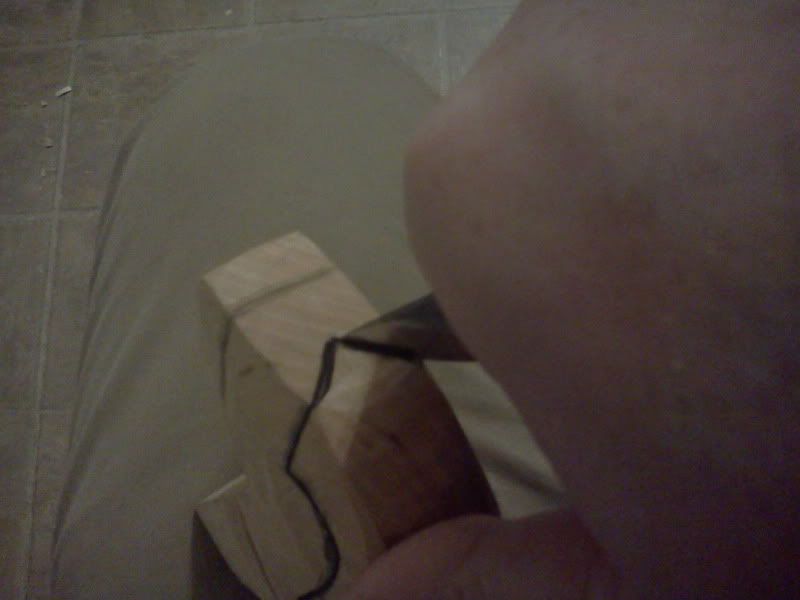


Now I shave up to the stop cut. The depth is subtle, no more than about 1/16", and results in the mane area being lower than the neck and body of the horse. At this point I usually go through and clean up any "fuzzies" and try to make sure the lines are straight and even.
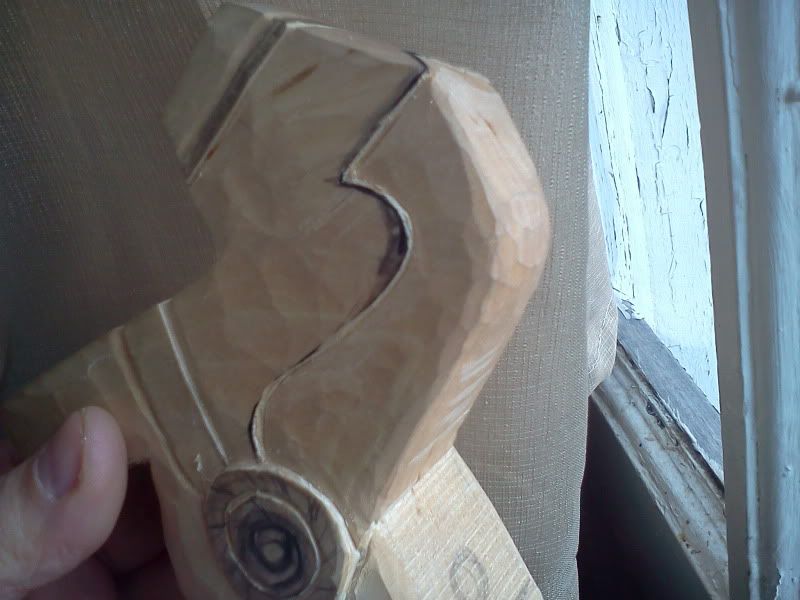


Stop cut/shave towards cut is a good way to remove material in a controlled manner, especially if you're only using a knife. Specialty tools can be used, of course. In fact I'll often go through during the clean up phase and run a v-tool or gouge along a cut. Then again I think pure whittling is done with a knife, so your experience may vary depending on personal preference.


On a side note, I'd like to suggest you check out the Belfast Bushcraft Blog. Great photos, updates, and wilderness observations from an Irish outdoorsman.

(sorry for the delay, Abo!)